2Dv8.23.0
PixiJS
The 2D engine behind games, ads, apps and interactive sites for hundreds of global brands. It draws sprites, text, graphics and filters on WebGPU or WebGL.

Create beautiful games, apps and interactive digital content with the fastest WebGPU or WebGL renderer.
Used by hundreds of global brands, among them Marvel, Red Bull, Spotify, YouTube, Adobe, Disney, Google, BBC, HBO, LEGO, 20th Century Fox, Barclays, Bose, Cartoon Network, H&M, Lucasfilm, McDonald's, Orange, PBS, Ray-Ban, Steam, TEDx, Toyota, Ubisoft, Volkswagen.
PixiJS is built for speed. It's the fastest 2D renderer there is, and PixiJS 3D batches meshes into instanced draw calls.
An easy-to-use, feature-rich API takes care of the fundamentals while you focus on building games and apps for any platform.
PixiJS is and always will be open source, with a large and supportive community that contributes to its development.
PICK A DIMENSION
PixiJS 3D is an extension, not a fork. It renders inside your 2D app, so you can add it to a project you already have.
2Dv8.23.0
The 2D engine behind games, ads, apps and interactive sites for hundreds of global brands. It draws sprites, text, graphics and filters on WebGPU or WebGL.
3DNEWv0.1.0
It adds meshes, PBR materials, lights, shadows and glTF models to the same scene graph as your sprites.
Everything that made PixiJS fast in 2D, now in 3D too.
Run your content on desktop, mobile and any other device with a modern browser. Write one codebase and ship it to all of them.
Text renders anti-aliased at native and retina resolutions, so it reads as clearly on the canvas as it does anywhere else.
Organise your objects in hierarchical trees, with parent-child relationships, in two dimensions or three.
Tint any object and use the Photoshop-style blend modes that designers already know.
Load spritesheets, graphics, fonts and animation data, and now glTF and GLB models with their materials, skins and animations.
Load a range of spritesheet formats, with support for trimming and rotational packing to fit more sprites on each sheet.
Use the built-in filters or write your own shaders. Meshes get metallic-roughness materials, image-based lighting and point, spot and directional lights.
Ask for WebGPU and PixiJS falls back to WebGL wherever it isn't available. It handles the switch for you, in 2D and 3D.
The API is designed to be easy to learn. It's simple enough for beginners and still gives experienced developers full control.
PixiJS tracks multi-touch input, and now ray-picks meshes so they take the same pointer events as your sprites.
PixiJS places hidden DOM elements over accessible objects, so screen readers and keyboard users can reach them. No other WebGL renderer does this.
Wrap your project with Capacitor, Electron or Cordova to ship it to app stores and desktops. You can prototype and release with the same code.
ECOSYSTEM
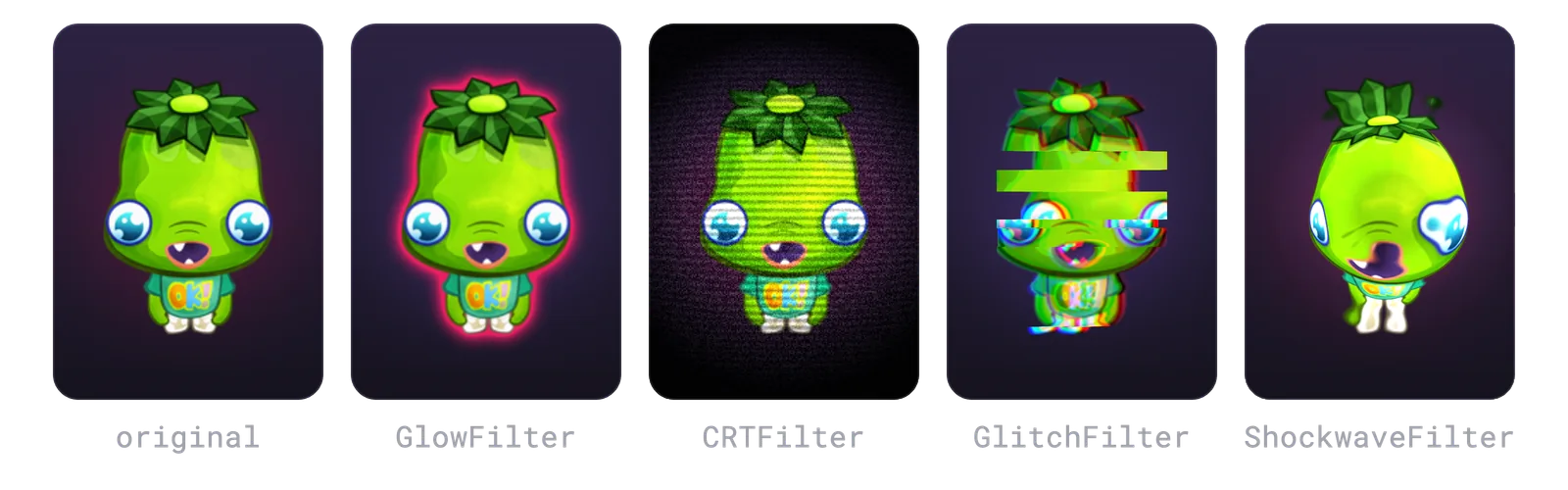
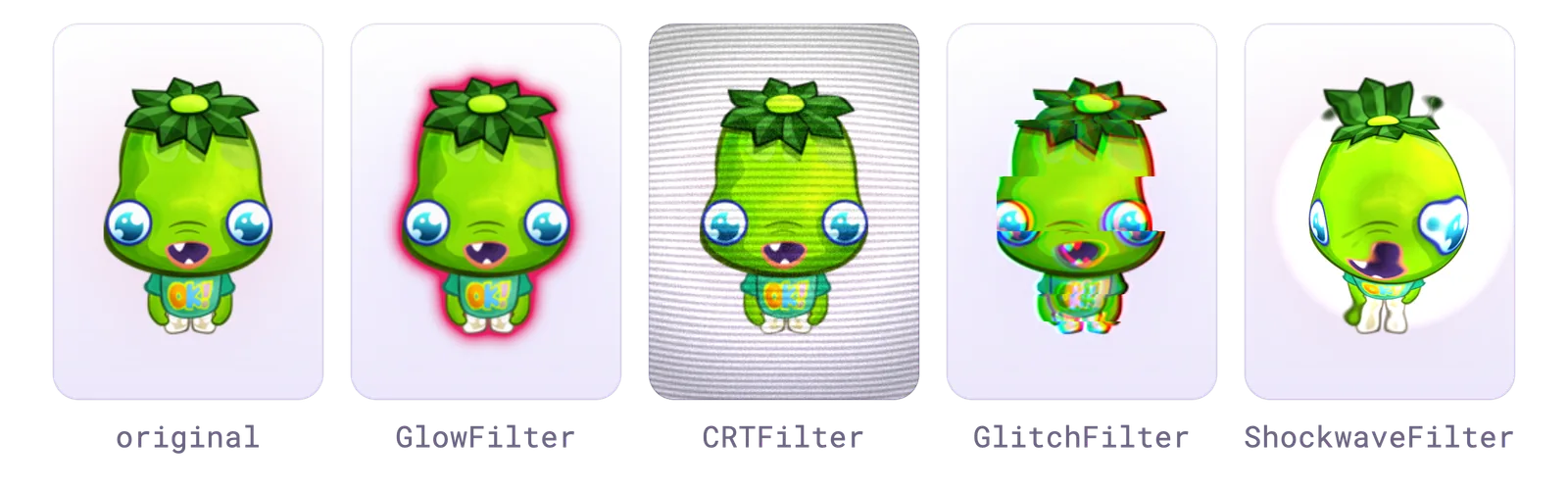
Nearly 40 ready-made filters for any display object: glow, CRT, glitch, ASCII, shockwave and more.
npm i pixi-filtersWrite PixiJS scenes as React components.
npm i @pixi/reactWebAudio playback, sound sprites and filters.
npm i @pixi/soundSkeletal animation with the official Spine runtime.
npm i @esotericsoftware/spine-pixi-v8Pack spritesheets, compress textures and write manifests at build time.
npm i -D @assetpack/coreInspect your scene graph and textures from Chrome DevTools.
npm i -D @pixi/devtoolsStart a project from a template, with a bundler set up.
npm create pixi.js@latestFlexbox layout for your containers and sprites.
npm i @pixi/layoutButtons, sliders, lists and scroll boxes for in-game UI.
npm i @pixi/uiSHOWCASE
PixiJS is fast, easy to learn and used in production worldwide. It has rendered 2D since 2013 and now renders 3D too.
These sponsors support PixiJS financially, so we can spend more time working on it.



